INTERVIEW // Arlie: In Conversation with the Not-Indie Band
If your experience was anything like mine, the entirety of high school was a hellish journey through the dismal abyss of fluorescent lights and corrupted potential, desperately seeking a voice that resonated when it felt like there was none. So, it’s no surprise that in the violent throes of my Junior year, Arlie’s 2018 breakout debut single “blackboard.edu” became my anthem. As I cried into my Common Application, the chorus lyrics, “And you keep me up all night / Can't talk right” reverberated in a way I desperately wished they didn’t. Shortly after, the Wait EP put Arlie on the map for real, introducing the band's biggest hits, “didya think” and “big fat mouth” into the world. Then it was radio silence. I was tossing and turning, waiting for them to come back for what felt like far too long. (Teehee.)
Like a breath of fresh air, 2022’s BREAK THE CURSE saw Arlie back, therapized, and ready for action. Aurally, it's a record that’s tough to classify, with a slew of inspirations from The Zombies to Of Montreal to Ella Fitzgerald to Jonathan Rado. Though Nathaniel Banks, the band’s frontman and mastermind, spent nearly a third of our interview listing the music that inspired him in the making of BREAK THE CURSE, you would be hard pressed to find a song on the record that feels like it was ripped from an artist he admired. Perhaps that can be chalked up to his musical aptitude, his immense talent to obscure and build upon references, but I have a feeling it comes down to authenticity. For Banks, Arlie isn’t just a band or an ephemeral project in the interim, it’s who he is.
“Technically, I started Arlie in the dorm rooms at Vanderbilt,” he shares, “but really it feels to me like Arlie is an extension of my being, and so it's never really started and will never really end.” The soul-tie between Banks and his musical project is clear. BREAK THE CURSE is an 11-track sojourn through the twisty depths of his mind, exploring the inner workings of the nervous system, problematic cycles of childhood trauma, and the importance of therapy. It’s like a startlingly insightful, eloquent series of diary entries set to spacey synths and roaring guitars.
Most would call Arlie an indie-hyphen-something else band. Indie-pop, indie-rock, you get the gist. Hell, that’s probably how I would have described them to anyone who asked before this interview, but in my overly verbose way (“they’re like a super danceable indie-rock electro-pop band, but they’re sincere which makes them special.”) But after Wait came out, Banks felt pigeon-holed by the genre.
“I was so tired of the word “indie” being misused, in my opinion, and sort of being used as just a catchall for, oh, it's this thing, but it's cool. So we're gonna call it indie. You can't just say it's indie just to make people think you're more tasteful than you are. I got really tired of it, and so I was just like, fuck that,” he muses. Ultimately, he decided to be faithful to his inspirations and impulses, resolving that he’s “okay with people calling it indie if that's what they wanna [call it].”
The interesting thing here, though, is that by attempting to cha-cha slide to the left of the indie allegations, Banks rammed straight into the nucleus of what truly makes a sonically indie record. Let me explain.
“Indie” started as a descriptor for a means of releasing music. Any song of any genre could be “indie”, so long as it was released independently. But as the term expanded, it started to develop some auditory qualities, namely something music writers love to call “grit”. Since “indie” began as a descriptor of independently released music, it generally characterized music that was made with a far lower budget, which made things sound far grittier than if they were made professionally in a recording studio with producers, engineers, and the works. This “grit” may come from many variables, whether intentional or not, but they generally stem from recordings being lo-fi, or low fidelity – a bare bones, stripped-back production that often lends to a lower grade of clarity. But why would someone pursue lower quality production? Banks broke it down:
“There is a sort of a magic in the surrealism of lo-fi, where your brain fills in the gaps the same way you do when you're looking at something in the dark and you start to imagine stuff that’s not necessarily even there. And if you have an active imagination, with lo-fi music, it's like you activate your imagination because you can't perceive all the details. You have to sacrifice some of that if you want to have clear mixes. It was a constant battle of trying to do the best of both worlds.”
Banks’ exploration of lo-fi recording may be what’s invoked the symbolic glowing “indie” halo over BREAK THE CURSE, but it’s not the only stylistic choice or sonic influence on the record. His desire to distance Arlie from the indie blanket is a fair one, because the general understanding of the descriptor removes any nuance in sound or style, reducing the music he puts his heart and soul into to a poorly-defined adjective.
I’ve veered far from the meat and potatoes of the interview at hand, but something tells me that if I had 10 more minutes with Banks, we would have spiraled even farther down the rabbit hole of genre discourse.
Moving on.
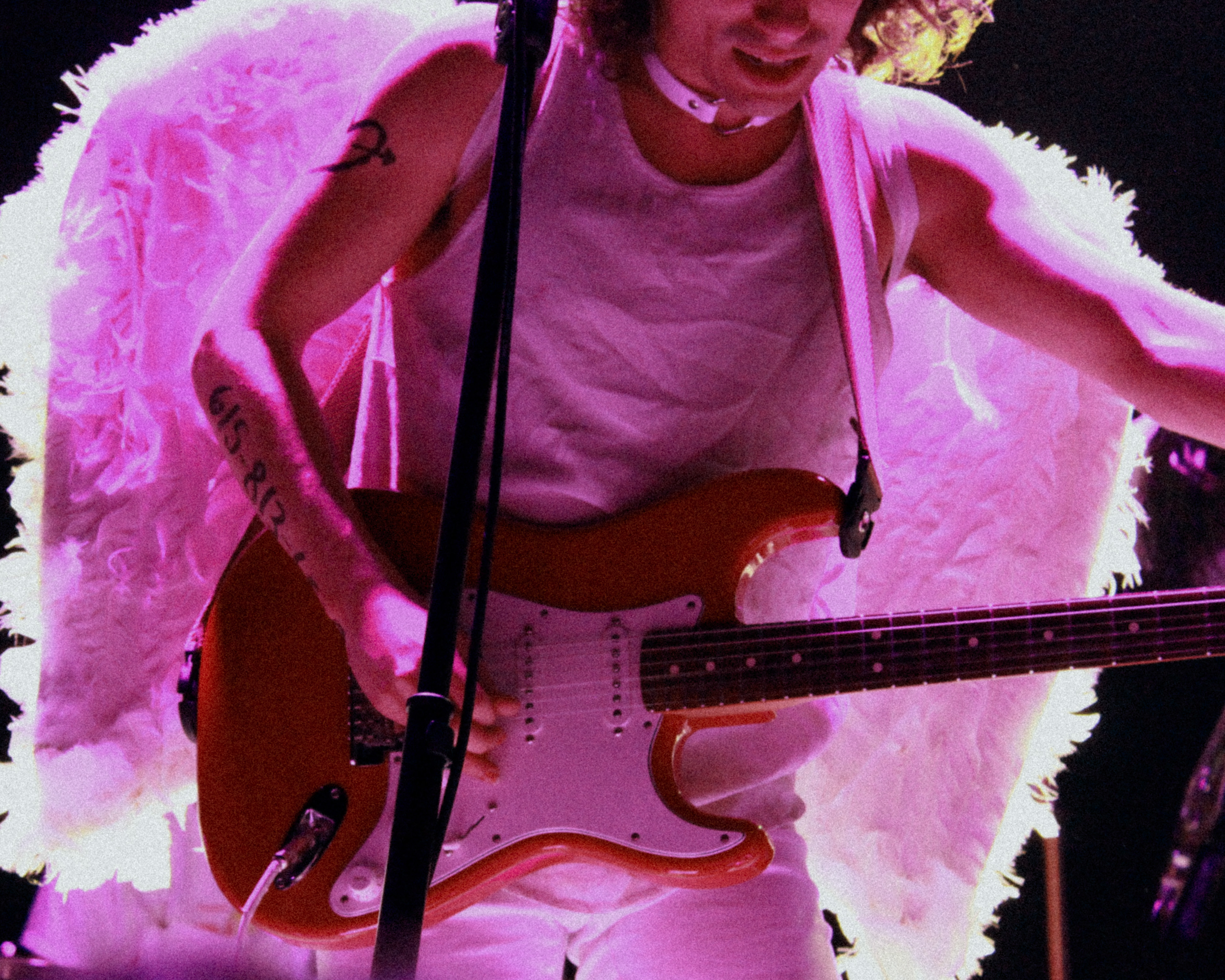
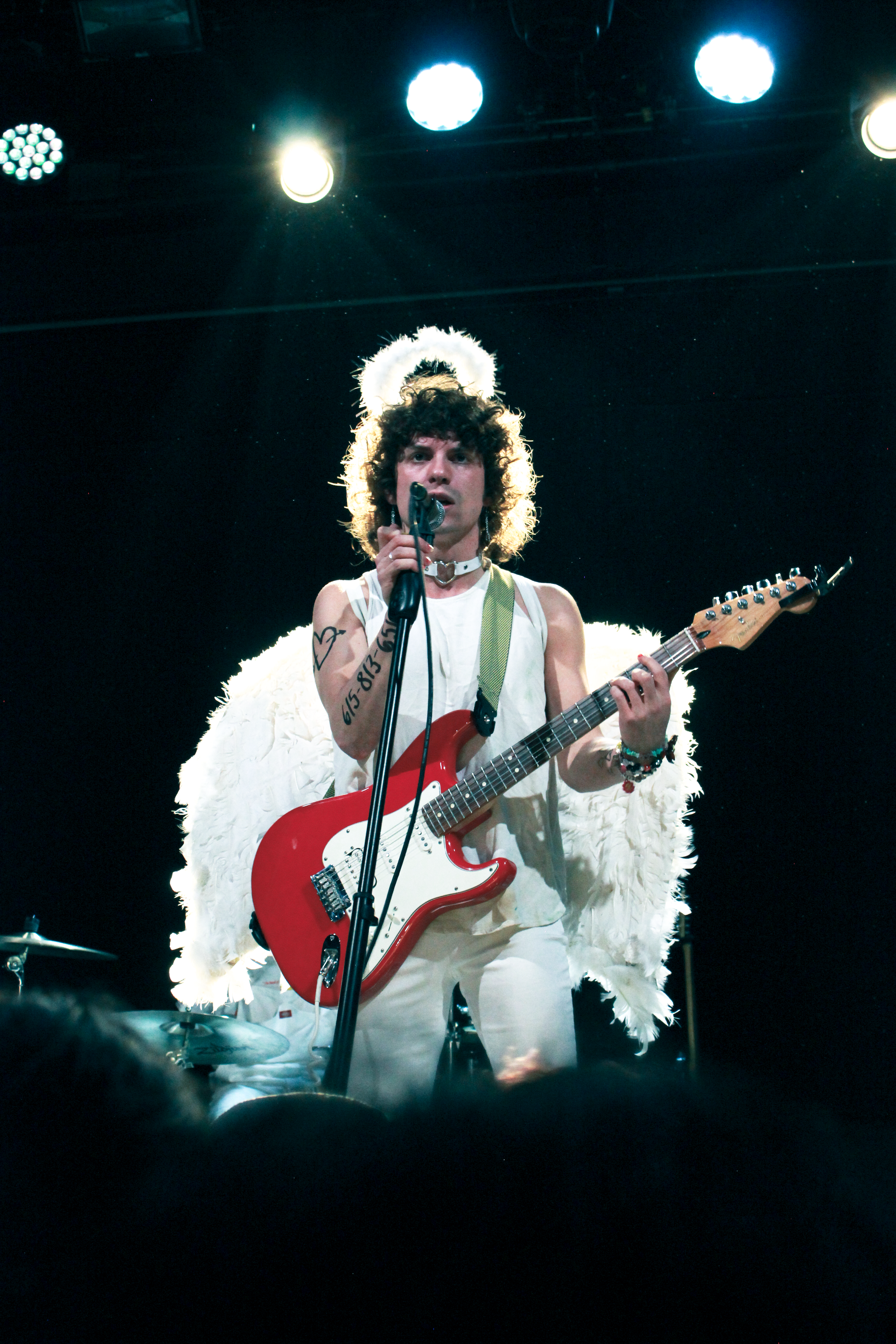
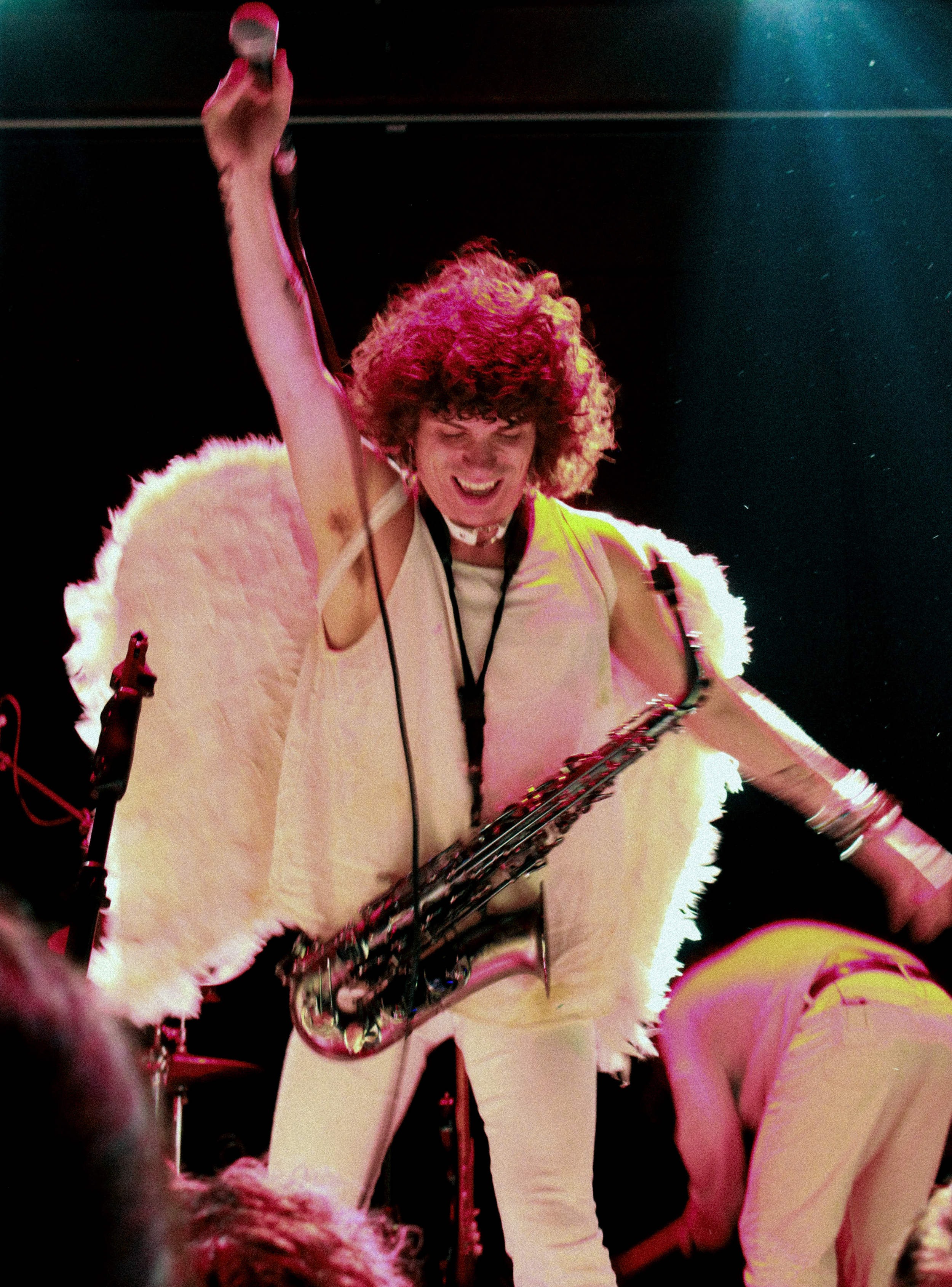
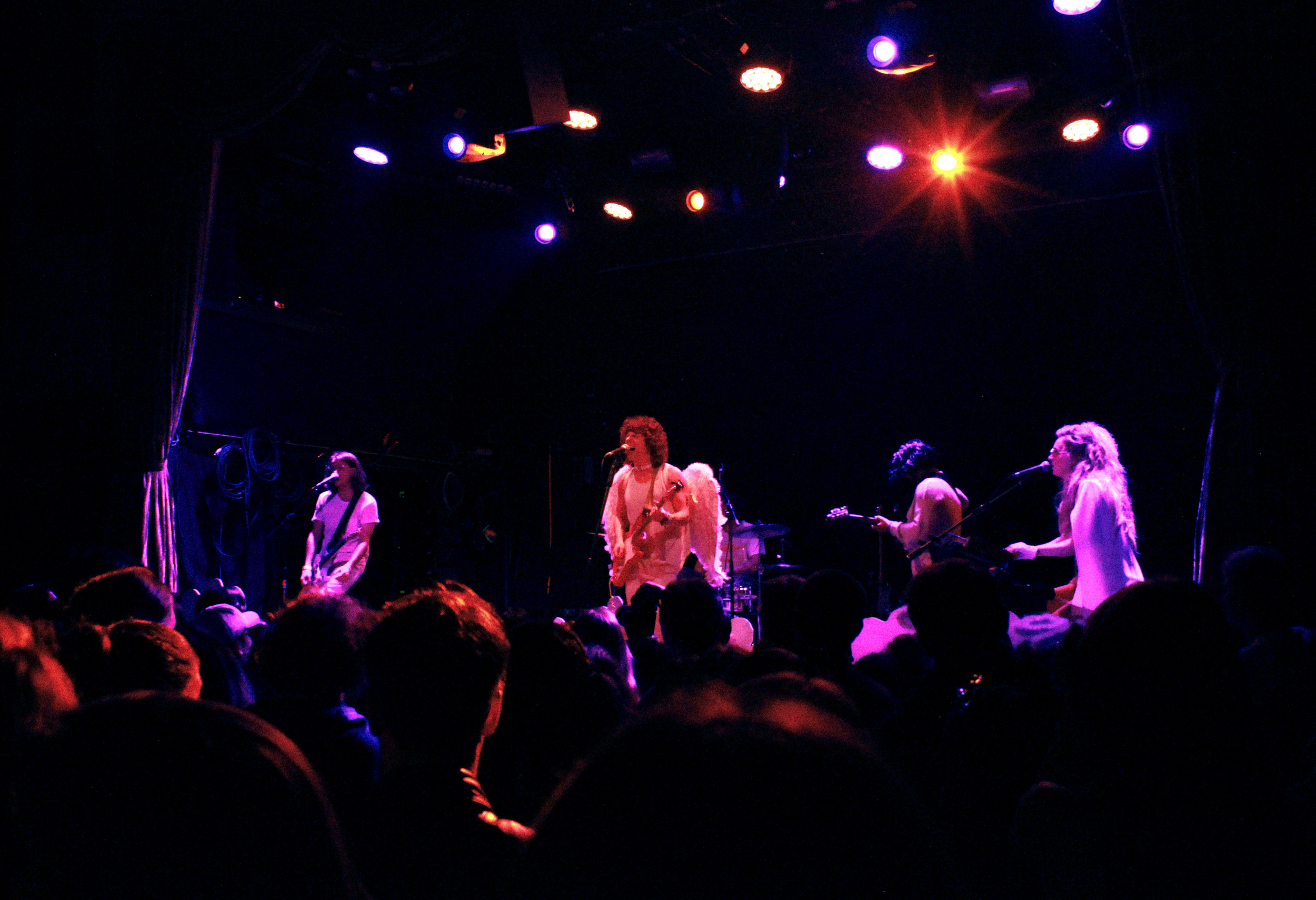
A week after our discussion, Arlie played a buzzing show at the Lower East Side’s Bowery Ballroom. Dressed in all white, Banks in a dramatic set of flocked white wings and halo, the gang of Arlie’s Angels played a rip-roaring set. They opened with “blackboard.edu” and I tried my best to remain professional, but by the time those fateful lyrics, “And you keep me up all night / Can't talk right” bellowed from Banks’ mouth, I was all in.
BREAK THE CURSE annals the wavering pursuit of mental stability, the process of breaking the cycles that hurt you, and seeking help to heal the trauma of your past. As I stood in the back of the Ballroom, screaming the lyrics of “blackboard.edu” and beaming with gratitude for the experience of being there, it became clear that my resonance with the song was no longer rooted in the frustration of emotional turbulence, but in the relief of resolving it.
If there’s one thing I’ve learned from Arlie, it’s that it’s not impossible to break the curse.
Words: Bella Savignano // Photos: Faith Waller
Keep up with Arlie on Instagram and stream on Spotify or Apple Music.