INTERVIEW // In the Van with Secondhand Sound
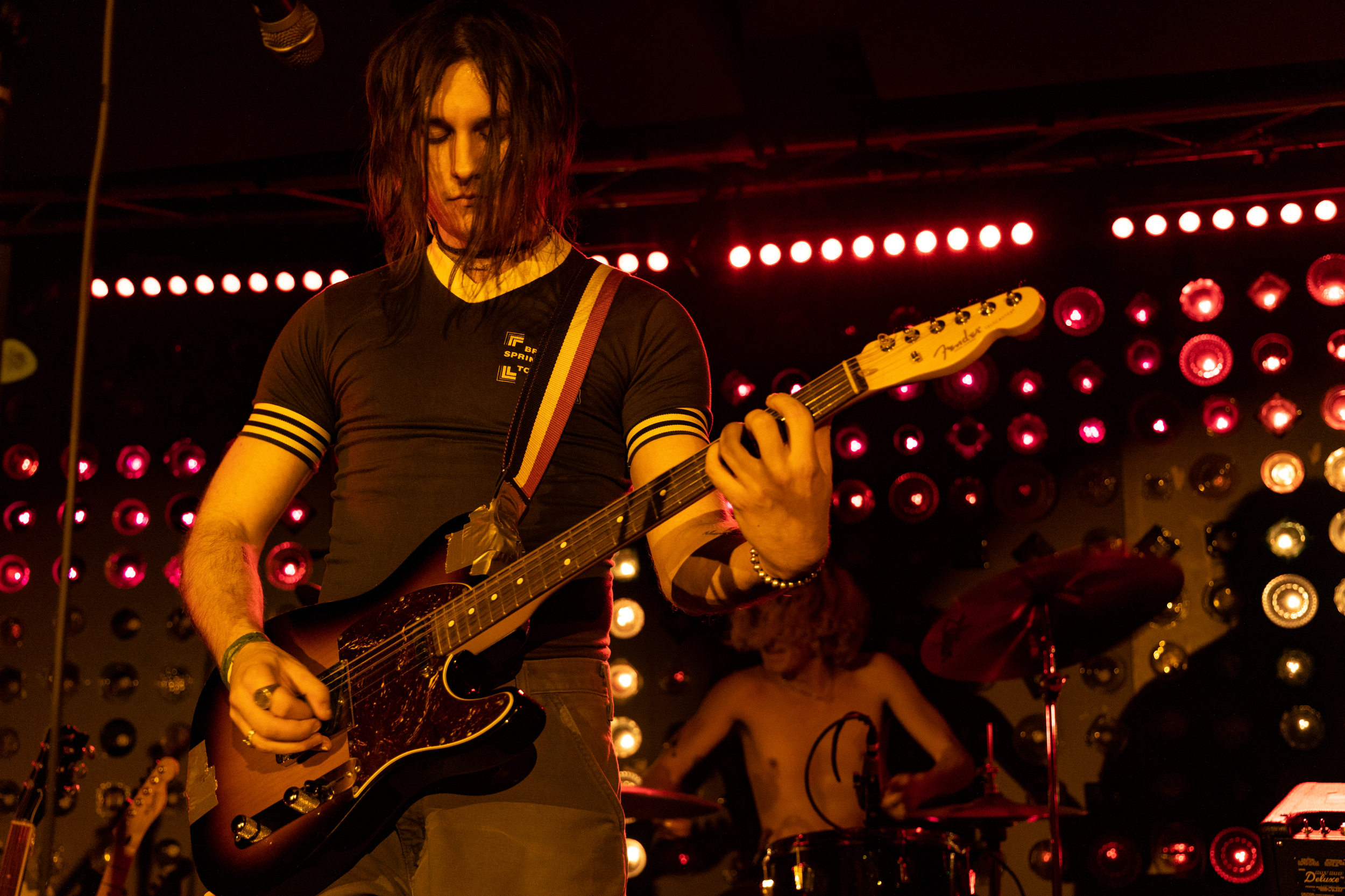
On a freezing February evening, all four members of Secondhand Sound and I shiver down Broadway, looking for a quiet place to sit down and talk before their Baby’s All Right show with The Backfires. After eying shop fronts up and down the block and peering into the window of the frilly bar across the street, we ultimately decided to resort back to their van. Huddled in the dark, a flashlight illuminating the seven-seater just enough for me to read my notes and see their faces, we all laugh from the absurdity of it all.
Secondhand Sound are visibly excited, having finally arrived in New York City after the long trip from their homebase of Nashville, Tennessee, just for this show. And they should be! It’s their first gig since August, and they’re itching to get back on the stage. Fast forward a few hours, and they put on the show for the ages, roaring through their set with the intensity and finesse of a band who's twice as old as they are.
Secondhand Sound’s appetite for success is palpable. The quartet – Sawyer, David, Teagan, and Plank – had a tumultuous 2022, but they’re up and running into 2023 with fistfuls of enthusiasm, a record in their back pocket, and a growler full of their Diskin Cider x Secondhand Sound hard cider in hand.
The Lamb sat down with Secondhand Sound to talk about their new record, the Nashville scene, and singing the National Anthem acapella-style.
Bella: Introduce yourselves to the people!
David: I’m David! I play lead guitar.
Teagan: I’m Teagan, I’m the bassist.
Plank: I’m Plank, I play the drums.
Sawyer: I’m Sawyer, and I play guitar and sing.
B: You had a very big year last year. I was reading all about it! Between opening for Dashboard Professional and Jimmy Eat World to the recording of your next record to a hard cider collaboration, how are you feeling coming into this new year?
S: Well we did have a big year last year, but also a lot of shit happened on the business side and behind the scenes that was not awesome.
T: Yeah. I feel like it was a great year and that we did a lot of cool, diverse things in the sense of the cider collaboration. I appreciate you mentioning that, because it was really cool to do that! That was a good experience, but I feel like for every “up” we ever take, there's also a nose dive that isn't foreseen. Last year kind of spit us out, pretty hard. I mean, we're kind of still on that stage, honestly, but we're here now. Playing the show is a huge thing for us!
S: We couldn't even go into the studio to finish our next record until last month! And David just joined the band last month, so it's very much like, we feel optimistic and stronger than ever, but it's met with… I don't know. We've just been working specifically on this album for so long that we're super ready to get it out there. It's just that there's all business stuff that's gotta happen to enable us to release it the right way. But we're optimistic. We're ready to play music again all the time. It's gonna be a good night. We haven't played a Secondhand Sound show since like August!
B: Well, leaving the business out of it – musically, can you tell me anything about the record? Is that on the table to talk about?
S: Yeah, I mean, everyone knows it’s called “Courage”.
T: We cut the original batch of songs in May of last year. It was kind of a weird process where I think we basically cut the record with the intention of it being an EP and we were really set on these solid, six songs. And we were intent on doing that, but I think there was a bit of restlessness across everybody for the following months because it took us a bit to get it mixed and mastered and stuff. And we genuinely have a prepped and ready-to-release EP on our hands and there was very little stopping us.
And then we all had this feeling of, this, I guess like Sawyer says, courage. It's kinda a feeling and an embodiment of something. Sawyer is the main writing contributor, and I think that even he himself was like, I don't think I'm done writing about whatever this is standing for.
Because it's kind of like once you kind of leave something behind as a chapter of your band, you can't go back and touch it. So I think the fear was, if we dropped this EP and we had so many more good songs that could have made that EP better, would we have felt good about that? Because releasing two EPs isn't the same as releasing a record.
S: I think that was major. We worked so hard to put out a first album in order to be an “album band”. There's so much pressure on artists now to feed the algorithm with singles and EPs and stuff. But I mean, we're more in the game of giving people full albums to live to and walk around with instead of jumping on the hype bandwagon.
B: That leads me right into what I wanted to ask about! I want to talk about your debut record, The Best and Worst of Times. There's a major throughline of coming of age and escaping and leaving this past in a small town behind. And there's a lot of cinematic tropes, in a really wonderful way. Is the notion of it being a soundtrack to life something that you're aware of or was intentional?
S: Yeah, absolutely. That was definitely a soundtrack to our lives, for a long time.
B: Was there any thought process or inspiration behind that? Anything that you were listening to or watching that made you think, this is what’s soundtracking my life and now I'm putting this new thing into the world for other people?
T: It's just a reflection of the writer themself. It's not so much being inspired by something else than just looking inside yourself and being like, this has been a really difficult season. And kind of projecting that on the works in the sense of just… it's the soundtracks for our lives.
Inherently, even though I think music is made to be enjoyed by other people, it first has to be enjoyed by the writer itself. We wouldn't go cut something if we didn't actually believe in it in the first place. So I think in a lot of ways, The Best and Worst of Times is a pretty direct adaptation of what that season was and like I think we all agreed that record was really rough.
Even more rough than this record. I feel like we have yet to get to a point where making the records is a really streamlined, easy process, start to finish. I mean, for better or for worse, they put a lot of character and heart into the projects. I think The Best and Worst of Times was perfectly named because it was very literally that.
S: It was the worst of times reminiscing about the best of times. I feel like when you hit 19, shit hits the fan. Entering adulthood, realizing that your whole youth is basically over, or your childhood, and just coming to terms with it and reminiscing. It's our first album, I was like, I'm gonna put this here so that I can move on with the rest of my life. But the album felt like a moment in time that we captured. I think it was Taylor Goldsmith from Dawes, he was talking about his early albums and he was like, we're never gonna make that record again. So that's why you should listen to it. But we have moved on big time from a lot of the soundscapes on that album. I think all of us upgraded in our individual position big time on this next one.
B: If that first album encapsulated a specific time and feeling, could you prescribe a sentence or a feeling to this new album?
S: Courage.
B: I mean, that checks out.
S: I feel like with any album that you're making, if you're doing it right, there's gonna be a lot of hardships and that name stood out to me the most over and over again. It actually came from that cider collab, and we put the cider in growlers. And I was like, that's a dope name for a drink bottle. So we have a song called Courage in the Growler. That's not about cider, but when I had said the word courage in the song, I was like, that could definitely be a bigger name.
And then it just kept coming, almost as a reminder to keep going. There's a lot of days waking up and you don't know what the fuck's gonna happen. And it takes courage to overcome that.
B: I'm excited! Do you know when it's coming out?
T: Transparently, it's not mixed and mastered yet. Half the songs aren't. So there's even that legitimate roadblock.But in regards to personal, wanting to release it, I know the feeling is just soon. That's the most worth mentioning. We sincerely hope to release it as soon as we possibly can. Because we really like these songs. And I mean, a big part of playing shows like this is to showcase them. We're basically playing half courage songs [tonight], if not more! So we're trying to enter this new season for us and hopefully the music can quickly come after. Cause that's the best version of it, you know.
B: You guys formed in Nashville at Belmont. People don't really understand the essence of Nashville and how cool of a city it is for music! How did making your music there shape the way that you went about it, with there being almost 24 hours of live music around you all the time and being at Belmont, which is a school that's known for its music community?
S: We got here in 2018,but before the pandemic, there was a circuit of house shows that was literally just a shitty house basement.
P: But lots of opportunity for sure.
S: There was a healthy scene there. And you met everybody super fast and I mean, we dropped outta school because we realized we were learning more about the music business playing house shows. You play all those house shows and then you get to like the smaller venues in Nashville. It's a great natural ramp.
P: It’s like a gauntlet.
S: The first venue for most people is The End and then the High Watt's East room, and you slowly work your way up. You kind of just meet people. On our EP Burnout, we were playing all these house shows and we're like, we need songs that people are gonna want to look up after they see us at a house show. So it's called Burnout cause they're all fast songs, like barn burners.
P: Yeah, the whole performance, people would be partying upstairs during and we'd be playing in the basement and we're like, you guys need to come downstairs and watch us. Cause you hear it through the floor, so you're like, damn, that's a good song.
S: Nashville's just a great community to start. And then there's also the legends that live there. I'm from Maryland and when a band would come to Baltimore, I'd be like, I can't believe that Paramore is in this city right now. But in Nashville, every band you can think of lives there. You could be eating fucking dinner and Jack White walks into the room or the Kings of Leon or Paramore. Our old roommate used to work at Barista Parlor, which is a coffee shop there. And I remember he texted me that Haley Williams was in there, and I literally just drove there just to be like, “holy shit, that's Haley Williams!”
B: Just to be in her presence!
T: I feel like in Nashville, one thing is the professionalism gets to you pretty quickly, in a good way. I feel like being in Nashville, you're kind of forced to make great music, because if it sucks, people will tell you that, and it becomes pretty evident. There's so much talent and good recording where it's like, respectfully, if you're raised in a super small town, you make one song, everyone's talking like, “this is the best thing I've ever heard,” because that's not happening around. But in Nashville, you release a song and nobody will talk about it unless it's actually good. You know if you're going up in the town, you're actually making good music.
So I think it's good competitiveness. Not to the point that it's toxic. I'm sure it can get there for certain aspects of it, but just more in the sense of just Nashville makes great music, so you kind of have to swim with the rest or else you're gonna get pretty lost.
So it made us, even as freshman in college, pretty adamant about being like, we're gonna get a producer, we're gonna cut in a genuine studio. Because most people do the dorm. Kind of like, I'm gonna self-produce dorm style stuff. If it works for you, it works, but as a band, we are just like, we need to be produced, we need someone helping steer the ship with us to get the best sounds and takes out of us. And, it’s honestly worked a lot, just finding people to help us become better instrumentalists and all that.
B: I feel like a lot of independent bands and smaller bands that are starting off think that they know everything so well that they can do it all and that's not necessarily the case.
P: We owe a lot of people “thanks” for helping us out and the team extends a lot more than just the four of us in the band! We’re very, very grateful to the people we’ve met in Nashville for sure.
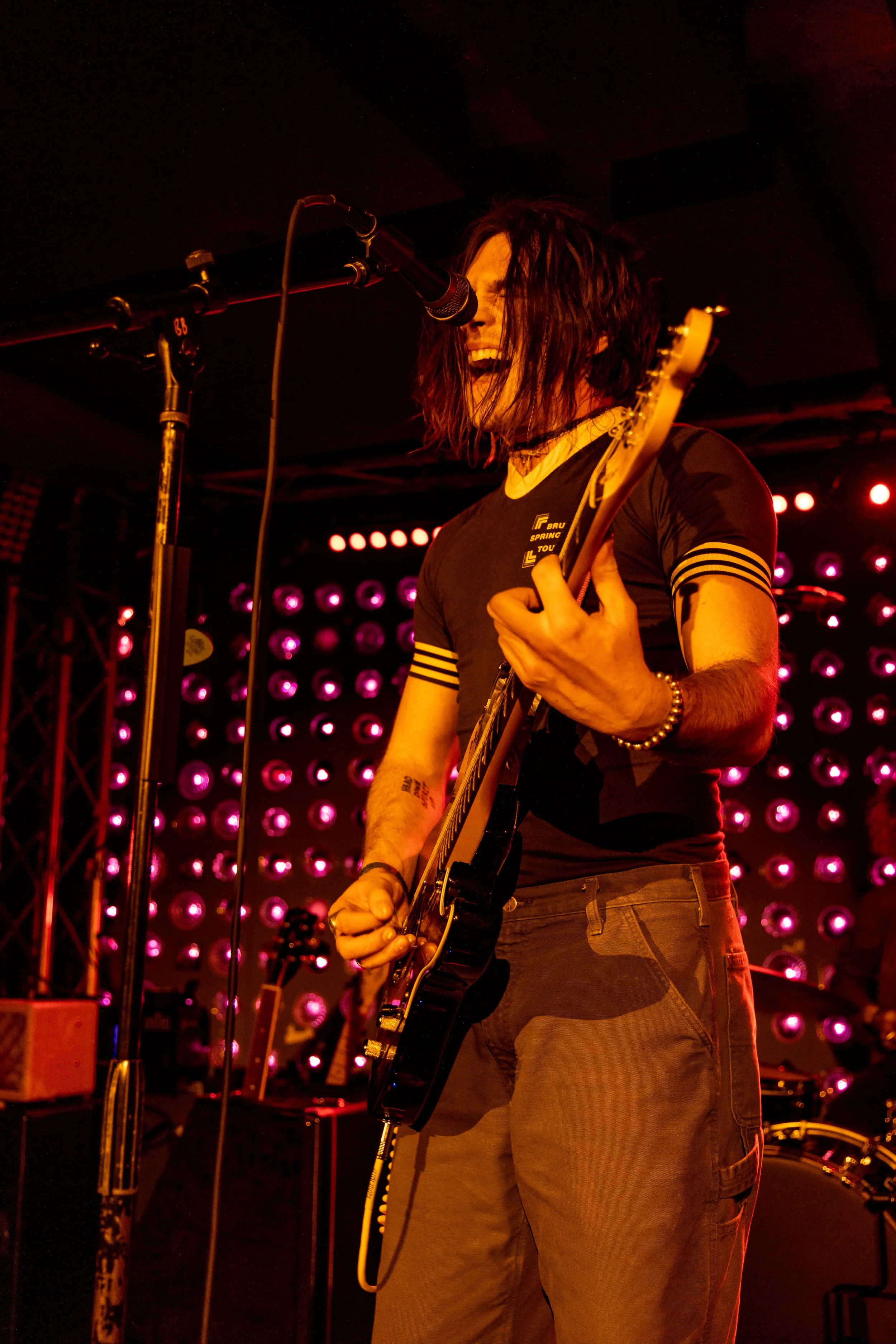
B: You mentioned the house parties and the music that's getting people to come down, and I wanted to reference something that Sawyer, I think you said in another interview, which is that you wanted to be a live show that people remember forever. Did that feeling come from playing those smaller shows and trying to make an impression in that way?
S: I'd go to shows, and you quickly realize that these bands are basically here to facilitate an environment for people to be themselves and celebrate their lives together based on the connection that they have with songs. I love the idea of all my favorite bands, like, you go to the shows and you realize everybody's just friends hanging out on the stage and you're like, that would be so cool. I think any band that prides themself in their live show, in setting up that environment, that's the coolest, or most meaningful thing that you can do. Especially if it affects people in some kind of way, which you can't force, it's super reassuring when it happens. When you start walking in that direction… it's been amazing… people respond to it. People are getting tattoos of The Stranger now and we have a Discord with a bunch of people that have met through the band and hang out and shit. I think that's the most important part.
And I mean, yeah, being a live band is definitely less of a mainstay in popular culture now, but there's still bands like Turnstile or IDLES where you go and see them and it's about that. And I think people really love that. I'm sure it'll come back in a big way.
P: It's important for us as a band to focus so much on the live show because we're from Nashville and we drove a million hours to get here and there's people in New York that are paying real money to come see us. We spent so long at house shows in people's backyards doing this for free and now we're in New York City and there's people coming out to this show that we don't even know, that are paying however much it is. It's a crazy feeling.
S: It's also awesome when we're in a city like Nashville or New York or LA, they're so entertainment industry heavy. But when we’re in, like, Albuquerque, people come up to us and are like, “we've never seen anything like a band before. You guys actually play your instruments! That's crazy!” We're like, dude, just come to Nashville. As long as we can deliver any kind of experience where they can forget their lives for a little bit, I think that's all it's about.
P: We just love it. It's the best part of our job! It's super fun.
B: All things considered, it's a pretty cool job to have. If you could play your dream show at your dream venue, what bands would you be playing with and where would the show be?
P: The ultimate dream is probably Glastonbury.
S: Glastonbury Pyramid Stage.
P: In front of like a hundred thousand people. And I don't care who's on the bill. But I mean, we're in New York, so Madison Square Garden would be incredible.
S: The Forum in LA! I kind of selfishly wanna play… What's the Cavs stadium name now? It used to be QuickLoans Arena.
T: Only Sawyer wants to play that.
B: And what bands do you wanna play with?
S: All of 'em. Literally. Paramore, U2 Arctic Monkey, Cage the Elephant, Sam Fender…
P: Fontaines DC. Anybody who wants to play, we’ll say yeah.
S: We don’t discriminate!
B: Do you guys have any weird pre-show ritual stuff that you have to do?
S: We were talking about that! Today we were trying to get one together. Before we found David, our friend Chris was playing guitar with us. And our pre-show ritual for that tour was we would sing the National Anthem. But all of a sudden, he was like “So let's sing the national anthem. I'll do the acapella baseline.” And he fucking nailed it.
P: That's probably the weirdest one, singing the National Anthem every night.
B: It was just so good you had to run with it!
T: I feel like we don’t have any set routines.
S: We got to find one though.
T: Like nicknames come about naturally, we can't force it, so we're waiting for something to happen where it's like, oh, this happens, we should do this every time. I feel like the biggest shows that we've ever played, it's really just been a huddle up, just kind of like, “Hey, let's enjoy the moment and not suck, not stress about it.” So I feel like it's more so just recognizing the moment and walking forward with it. But one of these days, man, we'll get some weird shit going.
B: This is gonna be on my mind.
P: When we play Madison Square Garden, it’s gonna be super weird!
B: In terms of consuming music, analog or digital?
S: Digital.
T: No, definitely digital, but I buy records and I feel like that's why I buy books and don't use Audible. It's me saying, this is important to me and I want to archive this. I want to have a kid one day and have him pull it off a shelf and discover that record. But obviously if I'm in my car I'm streaming. It's just easy.
P: You discover so much, so quickly.
T: The Spotify algorithms are so helpful towards finding new music. So I think that’s advantageous.
S: Recently, it’s been slacking for me!
P: That being said, I still love going to record stores, even though I'm not gonna buy anything, cause I don't have a record player. It's still nice to just sift through stuff.
B: I understand, from the perspective of all that music being at your fingertips!
T: It’s too easy! This just became scathing, you’re like… Secondhand Sound sucks!
B: You’re solely responsible for the decline of record stores!
T: Secondhand Sound sucks hard. They hate records. We don’t listen to music ever, actually.
P: We just sit in silence!
Photos: Hannah Roberts
Keep up with Secondhand Sound on Instagram and stream on Spotify or Apple Music.