
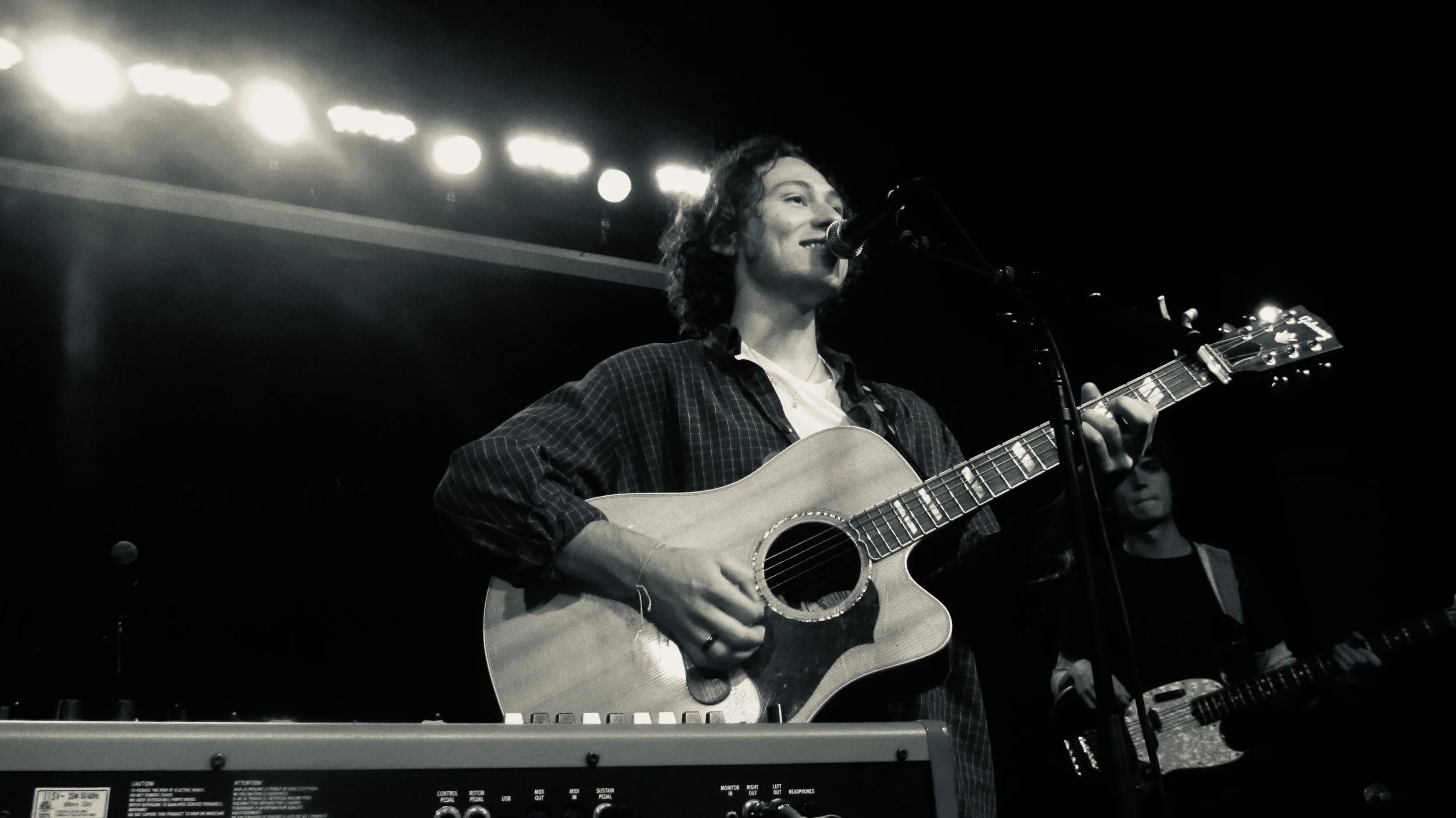
Photo by Hannah Jung
Jake Minch returned to Seattle for the second time on November 7th with his Getting Big Tour, where his songwriting centers on recognizing yourself as a villain in your individual narrative. One year after his debut album, George (2025), the NYC-based singer-songwriter has writing credits from Phoebe Bridgers’s new album to opening for Gracie Abrams on a European tour next May. Beyond his career growth, what makes Minch’s music stand out is his ability to turn uncomfortable personal stories into something all audiences can recognize in themselves.
A room full of people singing the same words but thinking about completely different experiences is something everyone should think about. Throughout the concert, it was hard not to notice how emotional people became during certain songs. Some were crying with their friends, others singing every word at the top of their lungs, and some were singing quietly in awe of every lyric. A lyric written about his personal experience might remind someone else of someone who betrayed them or of a completely different mistake they will forever regret.
In the VIP question-and-answer session, Minch was asked what forgiveness means to him and how he feels about the idea. Forgiveness connects to many of the themes in his music. We often think of it as something we give to someone else, but it can also mean learning to forgive ourselves for our mistakes. Songs like “Fucked Up,” “First I Was,” and “For Leaving” all explore the uncomfortable side of relationships, where you finally recognize that you might not always be the victim. Minch leaves room for the reality of relationships and how complicated they are; you can be hurt without recognizing that you hurt them too.
During the live performance, these feelings exploded out of the crowd. His recordings are personal and stripped back; performing with his band, Jesse, Carter, Liam, and Alix Page, gives the songs a bigger presence. His music builds on the words he presents in a live setting. You could tell the audience connection to Minch in Seattle. Ethan Tanton described how meaningful it was to wait so long to see an artist he had followed online, especially hearing songs that had helped him through his personal struggles. He called the experience emotional and incredible. Also, in my personal experience in Seattle, I will never forget the “Say Uncle” dance party with no phones. I have never seen a group of people so hyped for a band, dancing freely around. Showing how Minch’s music can become part of someone’s life long before they ever experience it live.
Maybe that is the point of The Art of Being the Villain. Everyone in the room has experienced the same heartbreak, or made the same mistakes. Some are thinking about someone who hurt them, or remembering someone they wish they had treated differently. Minch’s music isn't meant to tell people who is right or wrong. It gives them a chance to reflect and recognize their own stories.